For many small business owners, forwarding work emails to a personal inbox can seem harmless.
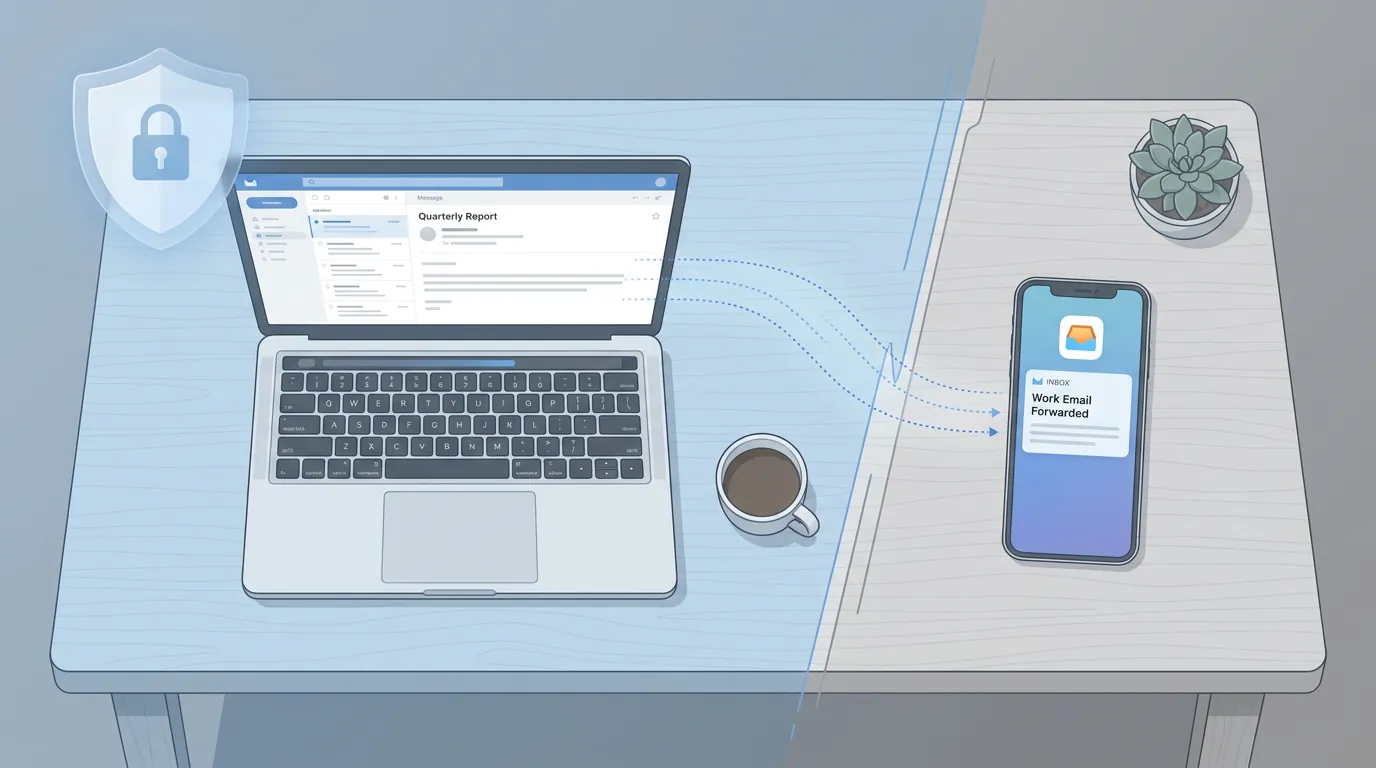
For many small business owners, forwarding work emails to a personal inbox can seem harmless.
It often starts with good intentions. Someone wants to keep an eye on urgent messages after hours, check emails more easily on their own phone, or make sure they never miss an enquiry when they are out of the office. In a busy SME, especially one with lean teams and people wearing multiple hats, it can feel like a practical shortcut.
The problem is that this small convenience can create much bigger issues in the background.
When business email leaves a managed work account and starts landing in personal inboxes, it becomes harder to protect, harder to track and harder to control. That matters not just for cybersecurity, but for day-to-day operations, client confidentiality and business continuity as well.
A work email account is normally part of a managed business environment such as Microsoft 365 or Google Workspace. That means it can be protected with the right security settings, monitored properly and controlled by the business.
A personal inbox is different.
Once business messages are being forwarded outside that managed environment, several risks appear very quickly:
In plain English, the business loses visibility.
That means important emails, attachments, customer details, invoices, passwords reset links or internal conversations may be sitting in places the company does not properly manage.
Imagine a director in Bolton forwards selected work emails to a personal Gmail account so they can keep up with things in the evening.
At first, it feels useful. But over time, that Gmail inbox starts to hold:
Now picture that same personal account using an old password, no multi-factor authentication and a phone that the business does not manage.
What looked like a simple convenience has now created a second, weaker copy of business communications outside the company's normal controls.
Even if nothing malicious happens, the operational problems are still real. If that person is off sick, leaves the business or loses their phone, key information may be harder to access or recover. If a customer raises a complaint or asks for records, the audit trail may be incomplete.
Many SMEs do not think of email forwarding as a cybersecurity issue, but it absolutely can be.
Email is often the centre of a business. It is where conversations happen, documents are shared, approvals are given and account recovery links are sent. If attackers gain access to email, they can often use it to move further into the business.
Forwarding work messages to personal email weakens the boundary around that data.
This can affect:
If customer information is being copied into personal inboxes, the business may not fully control how that data is stored, protected or deleted.
If something suspicious happens, it becomes harder to work out who received what, when it was accessed and whether it spread further.
If someone leaves and business emails have been forwarded to a personal account for months or years, you cannot assume every copy has disappeared just because the work account has been closed.
Depending on the type of data involved, forwarding business messages outside approved systems can create issues for data protection and internal policy compliance.
For a small business, this is not about creating red tape. It is about reducing unnecessary exposure.
The better approach is simple: keep business email inside business systems.
That does not mean making life harder for directors or staff. It means giving them secure, supported ways to stay connected without pushing company information into unmanaged places.
Good alternatives include:
If someone says they forward emails because they are worried about missing something important, that usually points to a process issue, not a forwarding issue.
The answer is to improve access and resilience inside the business setup, not work around it outside the setup.
If you want a simple place to start today, review these questions:
You do not need a major project to improve this. Often, the first step is simply identifying where the habit exists.
Stopping personal email forwarding is not just about reducing cyber risk.
It can also help your business become easier to run.
When communication stays inside managed systems, you usually get:
That is exactly the kind of practical improvement many North West SMEs need. It is not flashy, but it removes hidden risk and supports smoother operations.
If you suspect business email is being copied into personal inboxes anywhere in your organisation, treat it as a useful review point rather than a blame issue.
Check where it is happening, understand why people rely on it, and then replace it with a safer way of working. In many cases, the fix is straightforward once the right controls are in place.
At Managed IT Support, we help small businesses put in place simple, sensible systems that protect data without making day-to-day work awkward. That is part of making sure your technology is managed the right way.
If you want a practical review, start by checking who can access business email today, on which devices, and whether any messages are leaving your managed environment without good reason.
Book a free IT review and we'll show you exactly where your current setup is costing you money, leaving you exposed, or slowing your team down. No obligation, no hard sell.