For many small businesses, cyber security still feels like something that only becomes urgent after a problem. A suspicious login alert. A locked email account. A supplier message that turns out to be fake. By that point, the stress and disruption are already in motion.
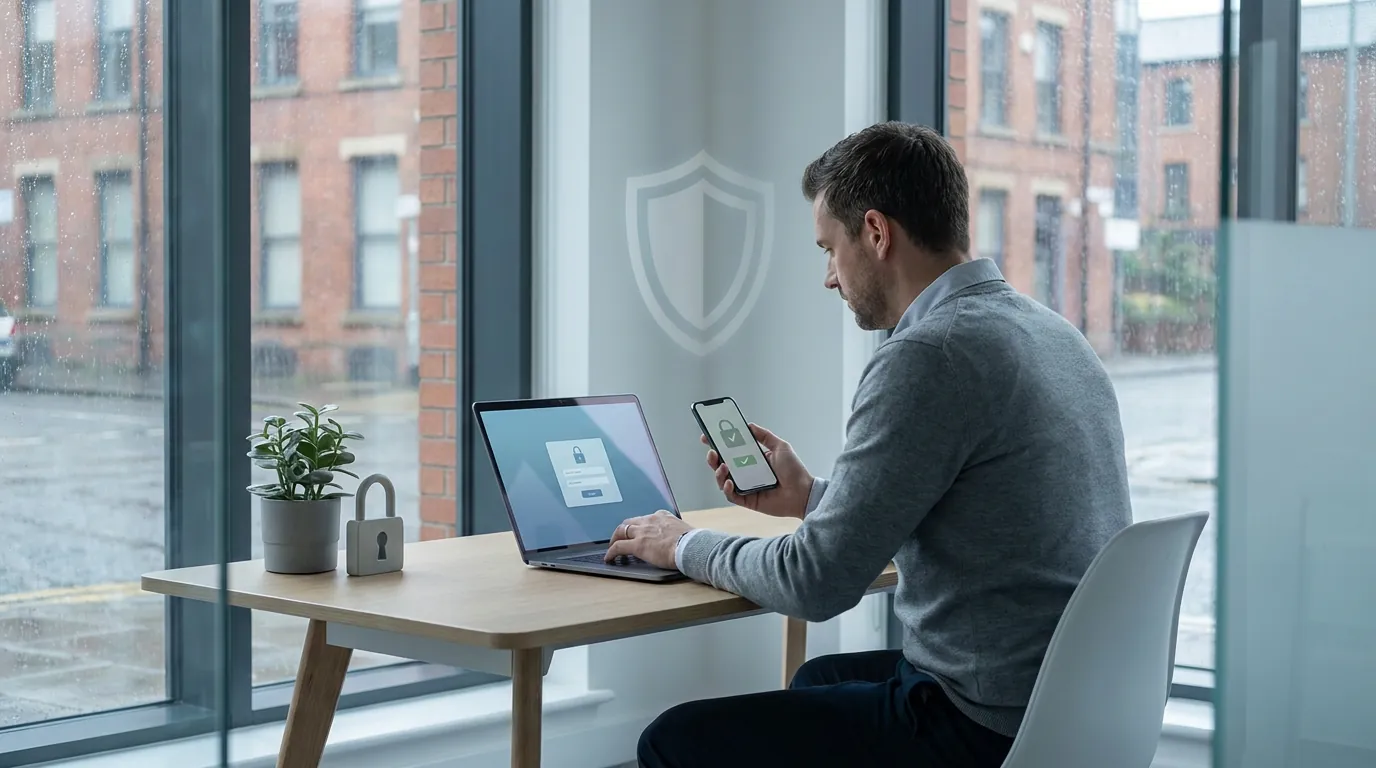
For many small businesses, cyber security still feels like something that only becomes urgent after a problem. A suspicious login alert. A locked email account. A supplier message that turns out to be fake. By that point, the stress and disruption are already in motion.
That is why multi-factor authentication, often shortened to MFA, matters so much.
In plain English, MFA means a password on its own is not enough. After entering a password, the user must confirm the login in a second way, such as through an app on their phone, a text message code, or a prompt asking them to approve the sign-in.
It is not a silver bullet, but it is one of the most practical security improvements a small business can make quickly. For a business using Microsoft 365, Google Workspace, cloud bookkeeping, CRM tools or remote access systems, it can make the difference between a blocked attack and a major clean-up job.
Most business owners understand the value of a strong password. The problem is that passwords are still regularly stolen, guessed, reused or exposed in data breaches.
That risk shows up in everyday ways:
If a criminal gets the password and there is no second layer of protection, they may be able to sign in as if they belong there.
For a small business in Bolton, Bury or elsewhere in the North West, that could mean access to email, files, Teams chats, saved contacts, invoices and sensitive customer information. It can lead to fraud, downtime, reputation damage and a long day of trying to work out what happened.
MFA makes that much harder. Even if the password is known, the criminal still needs that second step.
A lot of business owners assume MFA will feel complicated or frustrating. In reality, it is usually straightforward once it is set up properly.
A typical example might look like this:
That extra check often takes seconds, but it creates a strong barrier against unauthorised access.
The best options usually involve an authenticator app rather than relying only on SMS codes. App-based approval is generally more secure and easier to manage across a team. It also fits well with a modern managed IT setup where identity, devices and cloud services need to work together properly.
If you do not yet have MFA everywhere, start with the systems that would cause the biggest disruption if compromised.
For most SMEs, that means:
Admin accounts deserve special attention. If the wrong person gets into an administrator account, the damage is often wider and faster. Separate admin access from everyday user accounts wherever possible, and make sure MFA is enabled on both.
Switching on MFA is a strong step, but it works best when it is rolled out thoughtfully.
Here are a few common mistakes small businesses should avoid:
One director account, one shared mailbox, or one legacy login without MFA can become the weak point that undermines the rest.
Shared accounts are harder to secure and harder to monitor. Good security starts with individual accounts for individual people.
SMS is better than no MFA at all, but app-based authentication is generally the stronger and more reliable choice.
If someone changes handset, loses their device or leaves the business, there should be a clear process for re-enrolment and recovery.
People are far more likely to accept MFA when they understand why it matters. A calm explanation beats a technical lecture every time.
If you want this to stick, keep the rollout practical.
Start with a short review:
Then move into a phased rollout. Protect the most important accounts first, test the login experience, and make sure staff know what a genuine approval request looks like.
For example, if someone receives an MFA prompt they did not expect, that is not something to mindlessly approve. It may be a sign that somebody already knows their password and is trying to get in. Staff should know to deny the request and report it immediately.
That one bit of awareness can stop a small warning sign turning into a bigger incident.
Good cyber security should support the business, not slow it to a crawl. MFA is a good example of that principle. It is a simple control that improves resilience without needing a major technology overhaul.
For many SMEs, it is one of the clearest ways to protect email, cloud systems and everyday operations with minimal disruption. It supports business continuity, reduces avoidable risk and helps ensure your technology is managed the right way, not just left to chance.
If you are unsure whether MFA is enabled everywhere it should be, now is a good time to review it. Start with your email and cloud platforms, check your admin accounts, and make sure each person has their own secure login.
If you would like a second opinion on your current setup, Managed IT Support can help you identify the gaps and put sensible protections in place without overcomplicating things.
Book a free IT review and we'll show you exactly where your current setup is costing you money, leaving you exposed, or slowing your team down. No obligation, no hard sell.