Most small businesses think about cybersecurity in terms of passwords, phishing emails and software updates. All of those matter. But there is another area that often gets missed because it looks harmless on the surface: browser extensions.
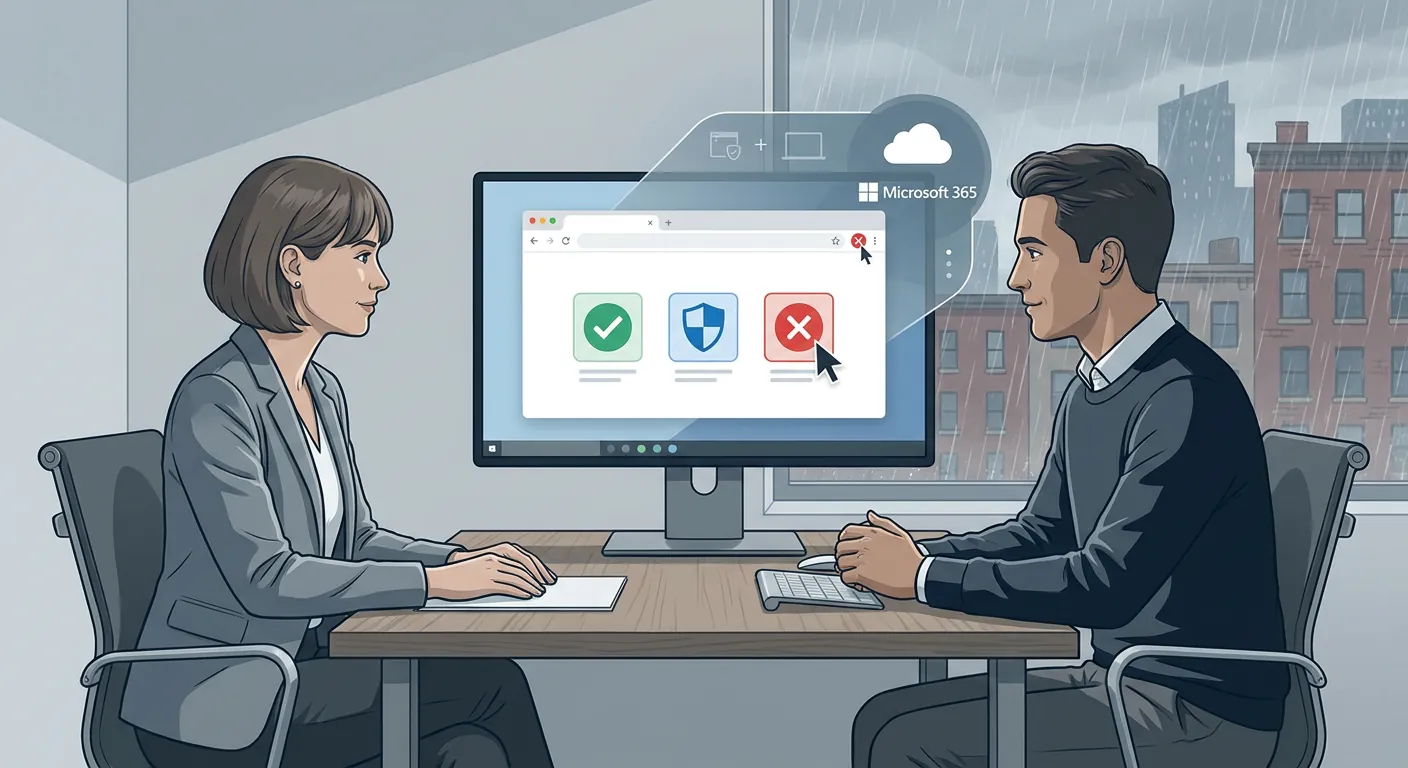
Most small businesses think about cybersecurity in terms of passwords, phishing emails and software updates. All of those matter. But there is another area that often gets missed because it looks harmless on the surface: browser extensions.
A browser extension is a small add-on installed in Chrome, Edge or another web browser to give it extra features. It might help with screenshots, grammar, PDF tools, password management, note-taking or productivity. Some are genuinely helpful. The problem is that many businesses never go back and check what has been added over time, who approved it, or how much access those add-ons really have.
For a busy SME in Bolton, Bury or the wider North West, that can create a quiet but real risk. If your team uses web browsers all day for Microsoft 365, Google Workspace, bookkeeping, banking, CRM systems or shared documents, a poorly chosen extension can end up seeing far more of your business than you intended.
Extensions often ask for permissions that sound technical and easy to ignore. In plain English, those permissions can mean:
That does not automatically make every extension dangerous. But it does mean small businesses should treat them with the same common sense they would apply to any other software.
If a member of staff installs an add-on because it saves a few clicks, they may not realise they are also giving that tool visibility into company email, finance portals, customer records or cloud platforms. In some cases, the extension is fine. In others, it may be outdated, overly intrusive, poorly maintained or no longer needed at all.
This usually does not start with anything dramatic. It often looks ordinary.
A team member installs a coupon tool, PDF converter, AI helper or browser utility on a work laptop. It works, so nobody thinks about it again. Months later, the person has left, the tool is no longer used, or the supplier has changed how the extension behaves. Meanwhile, the add-on still has access to browser sessions and work activity.
For a small business, the issue is not just cybercrime in the headline-grabbing sense. It is also:
If your business uses managed IT, this is exactly the kind of low-friction housekeeping that helps keep technology manageable before a bigger problem appears.
You do not need to turn this into a major project. For most small businesses, a practical review starts with a short checklist.
Start by checking which extensions are present in the browsers staff use for work, especially Chrome and Microsoft Edge. Many directors are surprised by how many add-ons have built up over time.
You are looking for a simple inventory:
If nobody can explain why something is there, that is a warning sign.
The easiest risk to reduce is the risk you do not need to carry.
If an extension is no longer used, remove it. If it was installed for a one-off task six months ago, remove it. If it looks unfamiliar and nobody can confirm its purpose, investigate it and, if appropriate, remove it.
The goal is not to strip out every useful tool. The goal is to keep only what genuinely supports the job.
When reviewing an extension, look at what access it wants. If a simple helper tool wants broad access to every page a user visits, that deserves a second look.
This is especially important on devices used for:
A useful rule for SMEs is simple: the more sensitive the systems in the browser, the more careful you should be about extra add-ons.
In many businesses, staff can install whatever they like in a browser without anyone else knowing. That may feel flexible, but it creates inconsistency and risk.
A better approach is to agree some basic guardrails. That could mean:
This fits the wider principle of keeping business technology managed the right way: helpful where possible, controlled where necessary.
More small businesses now run most of their day through the browser. Email, Teams, SharePoint, OneDrive, Google Workspace, accounting systems and support portals all live there. That means the browser is not just a browsing tool anymore. It is a gateway to the business.
When that gateway is cluttered with unreviewed extensions, you increase the chance of data exposure, performance issues and avoidable troubleshooting. When it is kept tidy and controlled, support becomes easier, users work more consistently, and the overall security picture improves.
If you have not reviewed browser extensions before, start small. Pick a handful of work devices this week and ask three questions:
That one exercise often reveals quick wins straight away.
For UK SMEs, good cybersecurity is rarely about one dramatic change. It is usually about a series of sensible decisions that reduce risk without making daily work harder. Reviewing browser extensions is one of those decisions.
If you would like a second pair of eyes on how work devices, browsers and cloud access are currently being managed, Managed IT Support can help you review the basics and tighten the gaps without overcomplicating things. That is often the fastest way to keep your technology secure, reliable and properly under control.
Book a free IT review and we'll show you exactly where your current setup is costing you money, leaving you exposed, or slowing your team down. No obligation, no hard sell.